
Let's start with the honest part
Divorce changes your relationship with your own body. And I don't mean that metaphorically. Your nervous system has been through a major rupture. You've lost a daily pattern of touch, or you've left a pattern of touch that didn't feel good anymore. Either way, your body doesn't quite feel like yours right now.
Rebuild happens in layers. The emotional work is real and necessary. But the physical reconnection matters just as much, and it's often the part people skip over or feel embarrassed to start.
Why pleasure feels complicated after divorce
There are three things happening at once, and it helps to name them separately.
First, the nervous system. Years of shared intimacy, whether it was warm or cold, created a pattern in your body. After divorce, that pattern is severed. Your brain is looking for touch in a space where it used to happen, and the absence is louder than the presence. This is neurological, not emotional.
Second, the identity shift. A lot of your sexuality was tied to being someone's partner. Not in a dependent way necessarily, but practically. You had a role, a rhythm, a context for desire. Now you're starting from scratch with yourself. That's disorienting. It's also an opportunity, but the disorientation comes first.
Third, the shame that sometimes gets layered on top. You may feel selfish for wanting pleasure. You may feel like you should be grieving, not exploring. You may worry that wanting to feel good again means you're not taking the end seriously. None of that is true, but the feeling is real enough that it stops people from moving forward.
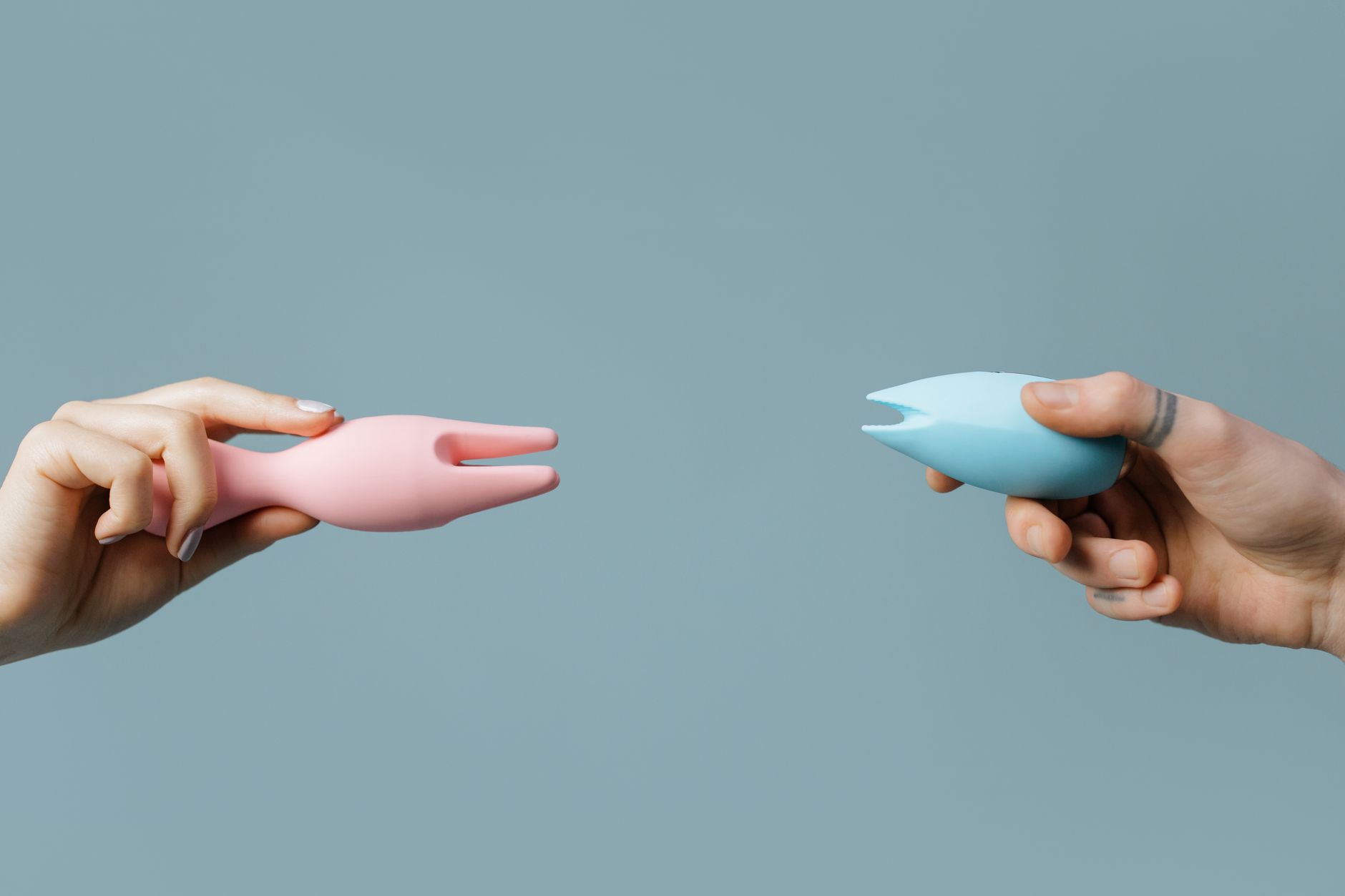
Photo by cottonbro studio on Pexels
Why lemon clitoral vibrators work for this specific transition
When you're rebuilding pleasure solo, you need tools that feel intentional, not performative. Lemon vibrators, specifically clitoral vibrators like the design that uses gentle suction, are uniquely suited to this work because they meet you where you actually are.
They're specific. A lemon vibrator works on your clitoris with precision. You're not trying to make something work for a partner's pleasure or navigating someone else's rhythm. It's purely your sensation.
They're gentle on re-entry. After years of partnered sex (or years of no sex), your nerve endings don't need intensity. They need consistency and clarity. The lem vibrator, for example, uses a pattern of gentle pressure and release instead of traditional vibration. Your body understands it quickly.
They're honest about what they do. There's no pretense. You're alone with a device that has one job, and that job is straightforward. That clarity is grounding when everything else feels fuzzy.
Building the nervous system back up
This is less about technique and more about rhythm. Your body needs to remember that pleasure is safe in solitude.
Start small. Not in intensity, but in time. Fifteen minutes with a lemon vibrator once a week is better than forty-five minutes of pressure-cooker exploration that leaves you frazzled. Your nervous system is already in recovery mode. You're not training for endurance right now.
Create a container. This doesn't need to be elaborate. It means: a time, a place, a sense that this is protected space. Lock the door. Put your phone in another room. Close the blinds. You're signaling to yourself that this time is yours and only yours. That matters more than the physical technique.
Notice what you feel, not what you think you should feel. Pleasure after divorce might come with complicated feelings underneath it. You might feel sad and aroused at the same time. You might feel lonely, or angry, or lighter than you have in years. All of that can coexist. The vibrator isn't supposed to fix the emotional layer. It's just supposed to reconnect you with the physical sensation of being alive in your body.
What changes when you prioritize your own pleasure
Something shifts in how you carry yourself. I've watched this happen hundreds of times in my practice. When someone prioritizes their own pleasure after a major relationship ending, they make different choices in every other area.
You start to set boundaries more clearly. Because you've practiced it. You've said: this time is for me, this sensation is for me, my pleasure matters. That muscle transfers to conversations, to dating, to work.
You become less desperate for partnership to complete you. This is crucial. The people who move into new relationships healthily are the ones who've done the work of feeling whole on their own first. They're not looking for someone to fix the loneliness. They're looking for someone to share the pleasure they've already found.
Your body trusts you again. After a marriage ends, your body has been betrayed in some way. Maybe not physically, but the rupture was real. Spending time alone with a lemon vibrator, where the only person who gets to decide what happens is you, rebuilds that trust slowly. Your nervous system learns that your own touch is safe.
The timeline piece (and why patience matters)
Honestly, there's no standard timeline. I have clients who feel ready to explore pleasure again six months after divorce, and others who need two years. Both are fine.
But here's what I notice: the people who rush it often feel worse. They're trying to prove they're over it. Or they're filling the void with intensity. It doesn't stick. The people who move slowly, who let themselves explore at a pace that feels genuinely interesting rather than urgent, end up with a completely different relationship to their own body.
If you're not ready yet, you're not ready. If you're curious and a little nervous, that's the sweet spot to start.
How this connects to dating later (if and when)
One of the best gifts you can give yourself right now is knowing your own body. Not in a clinical way. In a real way. What actually feels good. What tempo works. Where you like touch. What kind of pressure brings you pleasure versus numbness.
When you eventually date again, you won't be relying on a partner to figure you out. You'll be able to guide them. You'll know the difference between a partner who cares about your pleasure and one who's just going through the motions, because you have a real baseline for comparison.
That's one of the quietest powers of rebuilding your sexuality solo. You become fluent in your own body. Everything that comes after is a conversation, not a discovery mission.
A word on shame and self-compassion
If you feel weird about this, that's expected. We're taught that pleasure is something that happens in partnership. Solo pleasure feels selfish, or sad, or like a consolation prize.
It's none of those things. It's medicine. It's rebuilding. It's an act of self-respect.
So when you sit down with a lemon clitoral vibrator for the first time after your marriage ends, if you feel anything other than pure pleasure, that's fine. That's actually normal. You're doing something brave. Your body is relearning safety. That takes time.
Frequently asked questions
Can I use a lemon vibrator if I'm still grieving the relationship?
Yes. Grief and pleasure are not opposites. You can miss someone and still want to feel good in your own body. In fact, exploring pleasure while grieving can help you grieve more fully. It grounds you in the present and in yourself, which makes space for the sadness to move through instead of getting stuck.
How do I know if I'm "ready" to start exploring again?
You're ready when you're curious, not when you feel obligated. If you're thinking about it, wondering what it would feel like, that's readiness. If you're trying to convince yourself that you should be over it by now, that's not readiness yet. Wait until the resistance softens into genuine interest.
What if nothing happens the first time I try?
That's extremely common. Your body may not respond immediately if it's been a while, or if you're nervous, or if you're caught between the emotional and physical layers of this transition. Try again. And again. Sometimes it takes three or four sessions before your nervous system settles enough to feel pleasure. That's not a failure. That's your body slowly remembering that it's safe.
Should I tell anyone I'm doing this?
Nope. This is your private work. You don't owe anyone access to this part of your journey, including close friends or family. This is for you and only you. That privacy is part of what makes it powerful. You're not performing recovery for anyone. You're actually doing it.
Will this affect how I date when I'm ready?
Yes, but in good ways. When you know your body, when you've spent time understanding your own pleasure, you bring that knowledge into dating. You're not desperate for someone to make you feel good. You're interested in someone who can enhance something you've already found. That shift changes everything about how relationships develop.
What if I feel guilty for prioritizing pleasure when the divorce was hard?
That's grief and conditioning talking. Pleasure isn't an insult to the ending. It's an act of survival. You're saying to yourself: I've been through something hard, and I deserve to feel good. That's not disrespectful to the marriage or the person you shared it with. That's just you, rebuilding.
The short version
Divorce rewires your nervous system and your sense of self. Rebuilding pleasure alone is part of rebuilding yourself. Lemon clitoral vibrators work well for this because they're specific, gentle, and honest. They give you something to connect with while you're figuring out who you are on your own again.
Start small. Create space. Be patient. Your body will remember. And when it does, you'll realize that pleasure is one of the ways you know you're still alive, still capable of feeling, still whole. That matters more than the orgasm. The orgasm is just proof.
When you're ready to explore further, there's a guide on using clitoral vibrators for deeper connection and resources on reconnecting with pleasure after relationship trauma that might help. You can also reach out to contact us if you'd like personalized suggestions for your situation.