Here's what nobody tells you about hormonal sensitivity
Your clit doesn't just feel different after hormonal shifts. It becomes a different organ, neurologically speaking. The tissue thins slightly, blood flow patterns change, and the nerve endings that have been reliably responsive suddenly feel hypersensitive or, paradoxically, completely numb. Both are happening at the cellular level. Both are completely normal. And both are fixable.
This is the gap between what gynecologists mention in a five-minute conversation and what you actually experience at 11 p.m. on a Tuesday. That gap is where a lot of people give up on pleasure entirely.
Why standard vibrators often make it worse
Most vibrators work through direct friction or repeated tapping against delicate tissue. When your clitoris is already heightened or reactive from hormonal changes, that approach feels like someone's running sandpaper over a nerve ending. The sensation isn't pleasure. It's just noise.
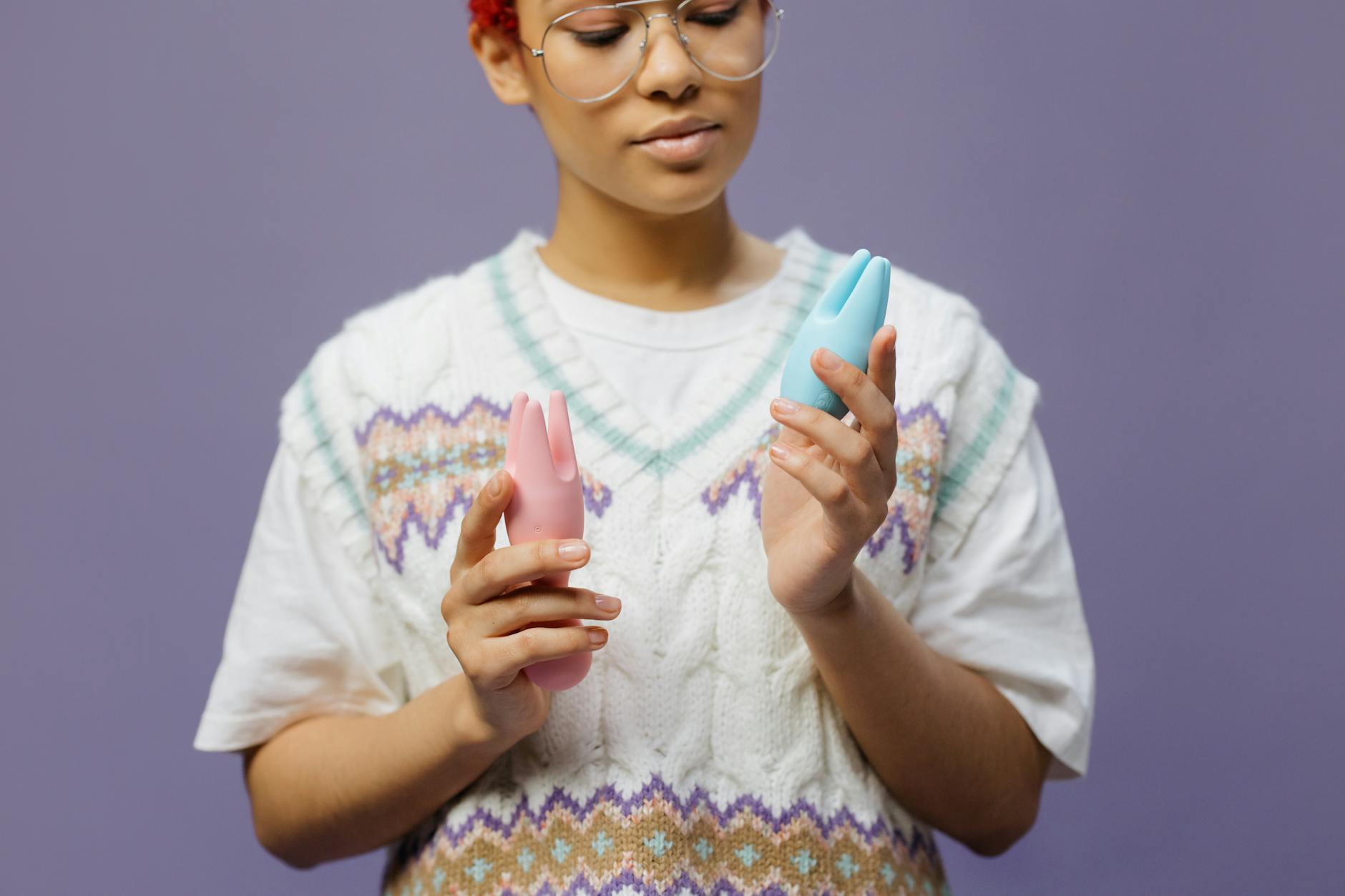
This is where air-suction technology changes everything. Instead of friction, lemon vibrators use gentle pulses that stimulate the clitoris from slightly above the surface, drawing tissue upward without direct contact. It's biomechanically different, and for hormonally sensitive bodies, it's often the difference between discomfort and genuine sensation.
I've watched clients cycle through three or four standard vibrators, assuming they'd lost capacity for orgasm, when what actually happened was their tissue became more sensitive and the tools didn't evolve with that change.
The physiology of hormonal sensitivity
When estrogen levels shift, the epithelial layer of your vulva gets thinner. The same thickness change happens on the inside of your vagina, but it's more noticeable on the outside where the clitoris sits. That's not weakness. It's biology.
The clitoris has roughly 8,000 nerve endings concentrated in a small area. When tissue thins, those nerve endings are closer to the surface. Closer to the surface means more reactive. A touch that felt pleasant before now registers as sharp or overwhelming. The neural signal hasn't changed. The tissue sensitivity has.
Testosterone levels also drop during hormonal transitions, and testosterone significantly influences clitoral blood flow and erectile capacity (yes, the clitoris has erectile tissue, and yes, hormones affect it). When testosterone dips, arousal takes longer to build and the tissue doesn't plump up the way it used to. This is why 'how lemon vibrators enhance pleasure when arousal takes time to build' is such a real concern.
Why air-suction works better for sensitive clits
Air-suction vibrators create what I call a "pressure pulse" rather than a vibration wave. The mechanism gently draws the tissue upward, creating stimulation through suction and release rather than through direct contact or tapping. This matters because:
1. No friction burn. The clitoris doesn't experience direct abrasion. There's zero risk of that raw, irritated feeling that comes from friction-based toys.
2. Controllable intensity without losing sensation. With a standard vibrator, your options are often "off" or "too much." Lemon vibrators have multiple intensity levels that genuinely change the experience. You can start at level one, which feels like a soft pulse, and work up gradually without the toy becoming aggressive.
3. The sensation feels like it's coming from inside your body, not outside. That makes it feel less mechanical and more integrated. Your nervous system responds differently when stimulation feels like it's part of you rather than something being done to you.
Rebuilding your sensitivity map
After hormonal changes, your clitoris needs reintroduction to sensation. Think of it like physical therapy, not punishment.
Start with the lowest setting for 3-5 minutes. I know this sounds slow. It's supposed to. Your nervous system has learned to brace against sensation. You're teaching it to relax into it instead. The Lem or other lemon vibrators at their lowest settings deliver that gentle, pulsing rhythm without overwhelming reactive tissue.
Pay attention to what's actually happening, not what you think should happen. Some people find that the softest setting creates almost no sensation. Others feel electric immediately. Neither is right or wrong. Your job is to notice where you are, not judge it.
Add lubrication, even if you don't think you need it. Hormonal changes often mean less natural lubrication. That's not a sign of low arousal. It's just physiology. A water-based lube creates a buffer between your skin and the toy, which can make even gentle stimulation feel smoother and more controllable.
Increase intensity in 20-30 second increments. Don't jump from level one to level three. Move to level two, stay there for half a minute, notice how your body responds. This slow escalation teaches your clitoris that it's safe to open up to stronger sensation.
Managing reactive versus numb sensation
Some people experience hypersensitivity: the clitoris feels too reactive, almost raw. Others experience hyposensitivity: they feel almost nothing. It's also possible to swing between both in the same session.
For hyperreactivity: Use the Lem on its lowest setting, positioned slightly to the side of the clitoris rather than directly centered. This gives you stimulation without the direct intensity. Take breaks. You don't need a continuous 15-minute session. Three minutes of stimulation, thirty seconds of rest, then three more minutes often works better than pushing through discomfort.
For hyposensitivity: Build longer sessions at higher intensities, but do it gradually. Your nerve endings need time to "wake up" and respond. This is where patience genuinely matters. Many people assume they've lost sensation permanently when really their tissue just needs the stimulus to be present consistently enough to register.
For swinging between both: This is actually really common and usually means your nervous system is still recalibrating. Some sessions your clitoris will feel hypersensitive. Others it'll feel disconnected. Neither is the new permanent state. You're in a transitional phase. Using air-suction technology like lemon vibrators during this time is helpful precisely because you can adjust intensity mid-session without stopping.
The partner conversation
If you're with someone, this is worth saying out loud: "My body is responding differently to sensation right now. That doesn't mean I've lost interest. It means I'm learning what works." That sentence prevents three misunderstandings at once.
Many partners feel rejected when you pull back from direct touch or ask for different pressure. Naming the hormonal change removes the assumption that it's about them. Showing them how you're working with a lemon vibrator to navigate the sensitivity also often opens the door to them understanding that this isn't about avoidance. It's about exploration.
When to see a doctor
If pain persists beyond a couple of weeks of using low-intensity air-suction stimulation, check in with a gynecologist. Real pain (not sensitivity, but actual pain) can indicate genitourinary syndrome of menopause, contact dermatitis, or other treatable conditions. Topical estrogen creams work quickly and often resolve reactive sensitivity within a few weeks.
Likewise, if you're on medications that affect hormone levels or blood flow, it's worth mentioning to your doctor that your sexual response has changed. Sometimes a small medication adjustment or an addition like testosterone cream makes the difference.
FAQ: Your questions about lemon vibrators and hormonal sensitivity
How long does clitoral sensitivity usually take to stabilize after hormonal changes?
There's no universal timeline, but most people notice real stabilization within 4-8 weeks of consistent, gentle use of air-suction vibrators. Your nervous system learns that sensation is safe, and your tissue adapts to whatever hormonal state you're in. Some people feel improvement within days. Others need months. Both are normal.
Can I use a lemon vibrator if my clit feels completely numb?
Yes, and I'd actually encourage it. Numbness often responds well to consistent, gentle stimulation. The suction-based pressure from lemon vibrators can wake up nerve endings that feel dormant. Start low and be patient. Numbness tends to resolve faster than hypersensitivity because the tissue isn't being aggravated by too much intensity.
Is it normal for my clit to feel different on different days?
Completely. Hormonal cycles (if you still have them), stress, sleep, hydration, and even what you ate that day affect clitoral blood flow and sensitivity. One day you might handle level four easily. The next day level two feels like too much. This is why adjustable air-suction technology is so useful. You can meet your body where it actually is, not where you expect it to be.
What if a lemon vibrator still feels too intense even on the lowest setting?
First, confirm you're using water-based lube, which genuinely changes the sensation. If you're lubricated and it's still overwhelming, try positioning it off-center or covering the opening slightly with your hand to diffuse the sensation. You can also try just the suction without the vibration (many air-suction toys have a feature where you can pause the pulse). Some people find that just the pressure, without the rhythm, is what they need.
Can hormonal sensitivity go away completely?
For some people, yes. Tissue stabilizes, your nervous system recalibrates, and sensation normalizes. For others, your clitoris simply becomes a more sensitive organ long-term, and you adapt your tools and approach accordingly. Neither outcome is better or worse. It's just knowing what you're working with and choosing your tools accordingly.
Do I have to use lemon vibrators, or will any air-suction toy work?
Air-suction technology is the category that works. The Lem and similar lemon vibrators are designed specifically for this, with multiple intensity levels and precision suction patterns. Some people do well with other brands in this category. The key feature you're looking for is adjustable intensity and suction-based stimulation, not vibration.
Bringing it together
Hormonal changes don't end your capacity for pleasure. They change the mechanism. Once you understand what's happening physiologically and you have a tool that works with your body instead of against it, you often discover that pleasure is more accessible and more nuanced than it was before.
Lemon vibrators and air-suction technology exist specifically because sensitive clitorises deserve stimulation that's smart and adjustable. Your body isn't broken. It's just speaking a different language than it used to. The right tool helps you understand it.