The grief body is a real thing
Let's start with what nobody tells you: grief doesn't just live in your heart or your head. It lives in your body. After a significant loss, the nervous system locks into a protective crouch. Sensation dims. Pleasure feels impossible, selfish, or dangerous. You might describe it as numbness, but it's not actually that you've stopped feeling. It's that your body has pulled inward so completely that the usual pathways for pleasure are offline.
This is not a character flaw. It's neurobiology.
Why loss creates physical numbness
When you experience profound loss, your nervous system shifts into survival mode. Cortisol rises. The vagus nerve, which carries sensation between your brain and body, contracts. Blood flow redirects away from your genitals and toward your core organs, your limbs, your fight-or-flight machinery. Pleasure requires the opposite state. It requires parasympathetic activation, relaxation, blood flow, permission. Grief's protective mechanism actively prevents all of that.
Meanwhile, there's guilt layered on top. If someone has died, pleasure feels like betrayal. If you've left a relationship, pleasure feels like proof you should have left sooner. If you've experienced trauma or assault, pleasure feels like danger. The body responds to all of it the same way: it shuts down.
What makes this worse is that the shutdown is often invisible to people around you. You might look fine. You might be functioning. But internally, you've become a stranger to yourself.
The problem with relearning sensation through intensity
Here's the trap: when you're numb, the instinct is to seek intensity. Stronger vibrations, more pressure, anything to feel something. The logic makes sense. It doesn't work.
Intense sensation can actually re-traumatize the nervous system. When you're already in a protective state, aggressive stimulation registers as threat, not pleasure. Your body tightens further. The numbness deepens.
What actually helps is the opposite approach. You need to teach your nervous system that it's safe to feel again, in incremental, gentle stages. You need sensation that's stimulating enough to register, but gentle enough to feel like permission rather than demand.
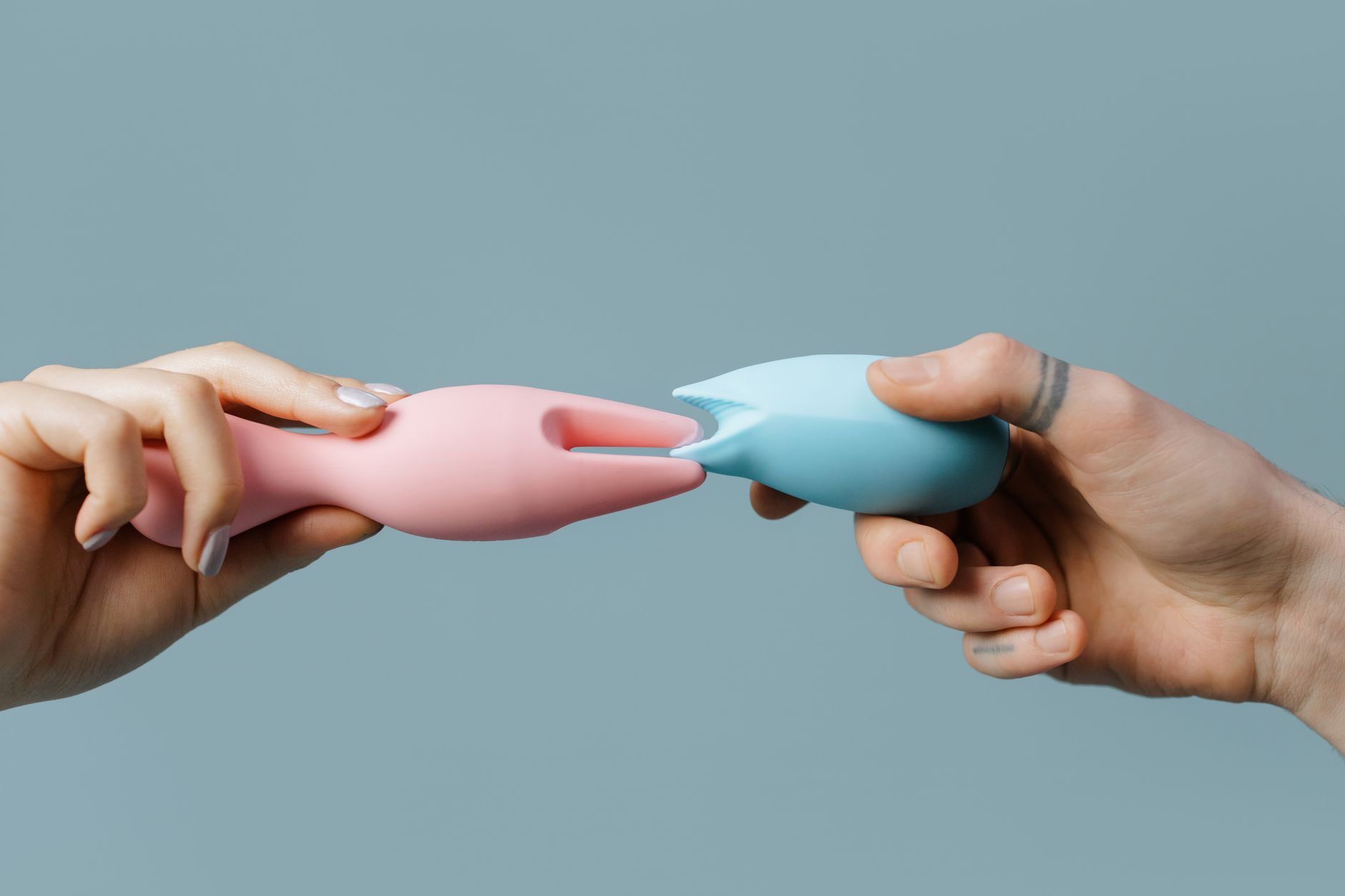
This is where lemon clitoral vibrators, and specifically the suction-based design of devices like the Lem, become genuinely helpful tools in reconnection.
How lemon sexual toys support nervous system healing
Lemon vibrators use a different stimulation pattern than traditional vibrators. Instead of rapid oscillation, they create a gentle suction and release cycle. This pattern is closer to the kind of touch that actually signals safety to a dysregulated nervous system.
Three reasons this matters for grief recovery.
First, the pattern is low-threat. Suction feels like a gentle pulling sensation rather than an impact or buzz. It's rhythmic and predictable. Your nervous system can anticipate what's coming next, which is a core requirement for feeling safe enough to relax and receive sensation.
Second, you can dial intensity without changing the fundamental experience. With traditional vibrators, you jump from pattern 1 to pattern 2 and suddenly it feels wildly different. With lemon adult toys and their suction design, the intensity progression feels like a natural deepening, not a jolt. You're in control of the pace of reconnection.
Third, the sensation is concentrated and localized. When your nervous system is in protection mode, diffuse or full-body sensation can feel destabilizing. Clitoral suction focuses pleasure into a specific, manageable area. This boundaries-based approach helps your brain understand that pleasure is contained, survivable, and under your control.
The practical process of reconnection
If you're working through numbness and grief, here's what usually helps.
Start with a lemon clitoral vibrator at the lowest setting, fully clothed or with it outside your body entirely. The goal is just to notice sensation without pressure to feel pleasure. Spend 2-3 minutes noticing the rhythm. Notice your breathing. Notice any subtle shifts.
Next session, same thing, but now you can touch your body with it through underwear. Still no expectation of arousal or orgasm. You're teaching your nervous system that this kind of touch is safe.
When that feels neutral or mildly pleasant, try direct contact at the lowest setting. Start with your clitoris not the most sensitive spot. Try your inner thighs, your labia, other areas. Let sensation spread before you demand it concentrate.
Only when several sessions feel genuinely safe do you gradually increase intensity. And even then, you might hover at pattern 2 or 3 for weeks. There's no timeline. The point is that you're in control of the pace, and your nervous system is learning through repetition that sensation plus safety equals possible.
Many people find that after weeks of this gentle, low-pressure practice, sensation returns. Not in a rush. In a slow, creeping way. Pleasure starts to feel possible again. Then survivable. Then, eventually, good.
The role of context and environment
No device works in isolation. The lemon suction vibrator is a tool, not a solution.
Context matters enormously. You need to practice in a physically safe space where you won't be interrupted or startled. Soft lighting. A door that locks. Your nervous system needs consistency and predictability to relax.
Timing also matters. Don't force sessions when you're dysregulated or in acute grief. You might do this work while you're already in therapy or coaching, using your session work to build safety between the deep emotional processing.
For many people, having a partner present (but not participating) is grounding. For others, being completely alone is what allows permission. You know what you need. Honor that.
When you're ready to involve a partner
If you have a partner and eventually want to rebuild shared pleasure, the same principle applies. Slow, predictable, low-threat. Many couples find that using a lemon clitoral vibrator together actually makes this transition easier. It removes performance pressure. There's no expectation that your body will respond quickly. You're both just witnessing sensation returning gradually.
Your partner can hold the vibrator. You can take the lead, controlling pressure and intensity. You can stop whenever you need to. The device becomes a vehicle for rebuilding trust, not just pleasure.
The timeline no one wants to hear
Re-embodiment after loss takes time. It's not months, usually. It's often months. For some people, years. This isn't a failure. It's actually evidence that your nervous system took the loss seriously and protected you well.
The goal isn't to return to the exact pleasure you had before. Grief changes you. Post-loss pleasure is different from pre-loss pleasure. It often includes more awareness, more intentionality, sometimes more gratitude. That's not a downgrade. That's integration.
When to seek additional support
If numbness persists beyond a year, or if pleasure remains paired with intense shame or fear, therapy specific to sexual trauma or complicated grief can help. A trauma-informed therapist can work with you on the specific nervous system patterns that are keeping you locked. Some people also benefit from somatic practices like yoga or breathwork to help signal safety to the body in ways talking alone cannot.
Pleasure is not frivolous. Reconnecting with your body after loss is genuine healing work. Lemon vibrators, with their gentle, intentional design, can be one part of that journey.
FAQ
How long does it take to reconnect with sensation after grief?
There's no universal timeline, but most people notice subtle shifts within 2-4 weeks of consistent, gentle practice. Real pleasure returning usually takes 2-3 months. Some people take much longer, and that's completely normal. The nervous system heals on its own schedule, not on anyone else's.
Can I use a lemon clitoral vibrator if I'm still in acute grief?
Technically, yes. Practically, it often doesn't help. Acute grief usually includes enough cortisol that your body genuinely cannot relax into pleasure. It's worth waiting until the initial shock has passed, usually weeks to a few months in. A therapist can help you identify when you're ready.
Is it normal to feel nothing the first few times?
Completely normal. When your nervous system is in protection mode, even gentle stimulation might register as neutral. That's not failure. That's baseline. Continue the practice. Sensation often returns gradually, sometimes unexpectedly. You might feel nothing for three sessions, then experience a subtle tingle on session four.
Should my partner participate in this reconnection process?
That depends on your relationship and what feels safe. Some people need total solitude to rebuild trust with their own body. Others find a patient, present partner grounding. What matters is that you choose, not that you follow a rule. If your partner wants to help, you can set clear boundaries: no expectations, no pressure, they can hold the device or just be present. Their job is to witness, not to manage your pleasure.
Do I have to use a lemon vibrator specifically?
No. Lemon sexual toys work particularly well for this work because of the suction design and controllable intensity, but any gentle, flexible vibrator can help. Some people prefer wands on the lowest setting. Others do better with their hand. The principle is the same: low-threat, predictable, controllable sensation that signals safety to the nervous system.
What if pleasure never fully returns?
Sometimes it doesn't, and that's worth accepting rather than fighting. Grief can permanently shift your pleasure response, and that's not inherently tragic. Your sexuality might look different post-loss. It might be quieter, less frequent, more connected to specific emotional states. That's still valid. That's still yours. The goal isn't to force yourself back to a previous version. It's to find whatever genuine pleasure exists now and honor it.
References and further reading
Levine, P. (2015). Trauma and memory: Brain and body in a search for the living past. North Atlantic Books.
van der Kolk, B. (2014). The body keeps the score: Brain, mind, and body in the healing of trauma. Penguin Books.
Bessel van der Kolk's research on how trauma lives in the nervous system has been foundational to understanding why reconnection requires gradual, somatic work rather than willpower alone.
Peter Levine's work on Somatic Experiencing demonstrates how the body's protective mechanisms can be safely released through controlled, incremental exposure to sensation and safety.
For grief-specific support, the Dinner Party (dinnerparty.org) and GriefShare offer community-based resources that complement individual healing work.